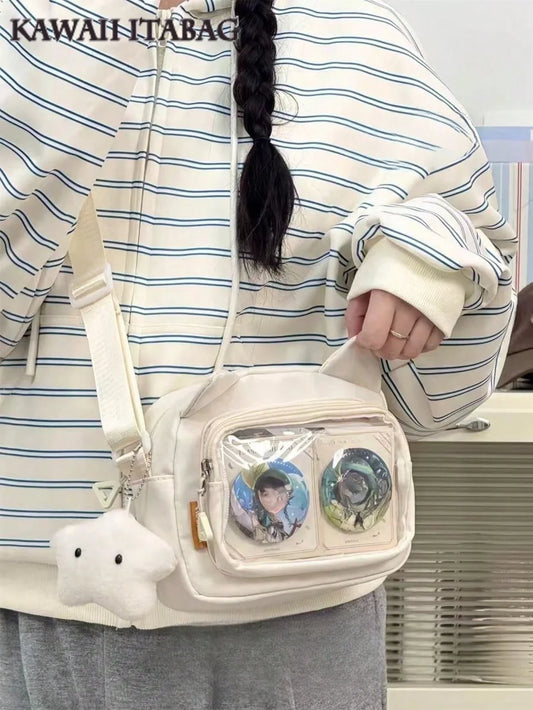
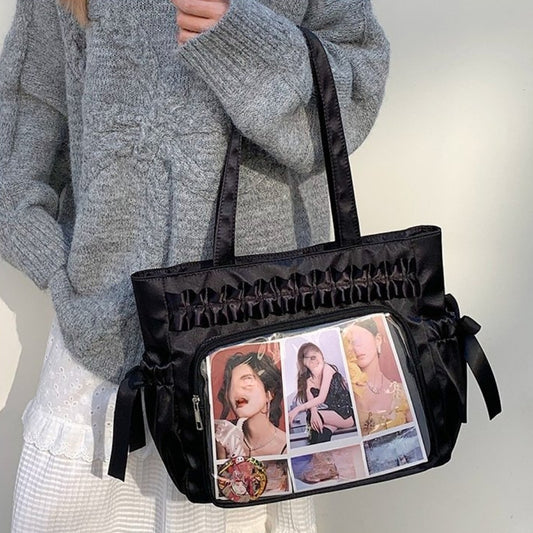
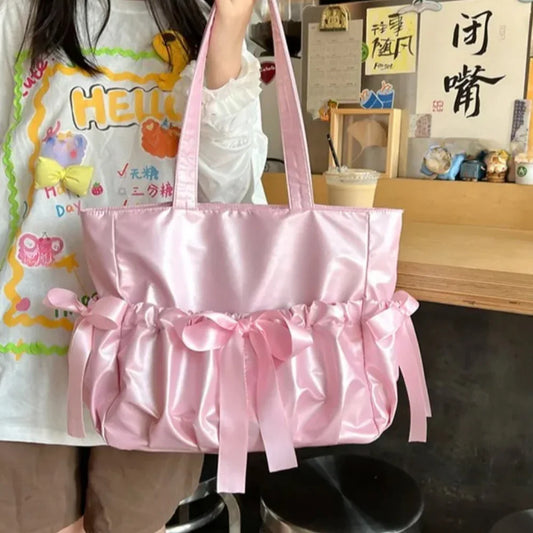
Lolita fashion has always been an accessory-conscious subculture, and the ita bag fits its visual logic naturally — but with a crucial difference in priority. In a standard kawaii ita bag, display quality is the primary concern and the bag exterior is secondary. In a lolita ita bag, the exterior construction matters equally. The bag must work as a coord-compatible accessory in its own right: silhouette, hardware, fabric texture, and trim detail all contribute to whether the bag can stand alongside a bonnet, peignoir, or tea-party shoes without disrupting the coordinate.
The three main lolita substyles each call for a distinct bag approach. Sweet lolita coordinates — the pastels, frills, and Angelic Pretty aesthetic — favor heart-shaped or rounded-rectangle silhouettes in white, pink, or lavender, with lace trim, ribbon closures, and light-tone hardware. Classic lolita builds, characterized by muted tones and Victorian or Rococo inspiration, suit structured rectangular or trapezoid-shaped bags with brass hardware, subtle embroidery, and minimal embellishment. Gothic lolita coordinates demand darker colorways — black, deep wine, or midnight navy — with ornate silver or black hardware and occasionally coffin or arch-shaped display panels.
Choosing a lolita ita bag:
Coord compatibility should be your primary filter before any other consideration. Pull the dominant colors and motifs from the coordinate you plan to pair the bag with, and treat the bag selection the same way you would treat selecting a headdress — it must harmonize, not just coexist. Lolita meetups and tea parties are the primary use cases, so prioritize bags with flat backs (for seating), modest carry capacity that does not overwhelm a delicate silhouette, and wrist or top-handle options that work with gloves. Display pins should relate thematically to the coord's motif whenever possible.
Explore related styles: browse Kawaii Ita Bags, Heart Ita Bags, and Goth Ita Bags for more.